The Best Time to Visit Seyðisfjörður, and What Each Month Costs You
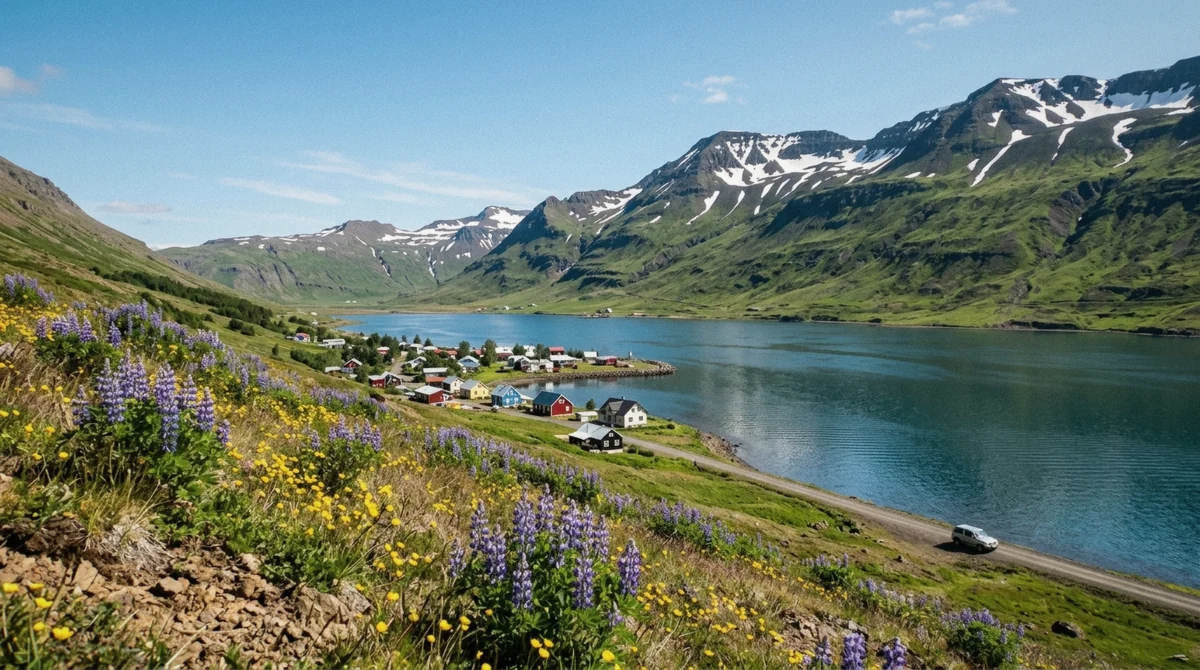
The best time to visit Seydisfjordur is the eight weeks where four separate calendars overlap: the cruise season, the puffins, the colour of the river at the canyon, and the mountain road out of town. This page sets out when that is, what you give up either side of it, and why September looks better on paper than it does in practice.
Quick answer
June and July. Both months give you puffins ashore at Hafnarhólmi, the turquoise river still running at Stuðlagil, the driest weather of the year at 56 and 57 mm of rain, day highs of 11 to 13°C, and an open pass over Fjarðarheiði. May and August each drop one of those; September drops three. Outside May to September there are no cruise calls and no guided trips from the pier at all.
Key takeaways
- Best overall: June and July, when the puffins, the river colour and the weather all line up
- Cruise season runs May to September and peaks June to August
- Puffins are ashore mid-April to mid-August and gone after that
- The river at the canyon holds its turquoise until roughly late August, then turns grey
- October is the wettest month at 214 mm; June is the driest at 56 mm
- November to March: the pass closes in storms, the trips stop, and daylight runs to about four usable hours
The Four Calendars
Nothing here shares a season with anything else, which is why a straight answer needs a table rather than a sentence.
| What | Open | Peak | Closed |
|---|---|---|---|
| Cruise calls at the pier | May to September | June to August | October to April |
| Puffins at Hafnarhólmi | Mid-April to mid-August | May to July | Rest of the year |
| Turquoise water at Stuðlagil | March to July | June and July | Grey from late August |
| The Fjarðarheiði pass | All year in principle | May to October | Closes in winter storms |
| The Norröna ferry from Denmark | March to October | June to August | November to February |
| Guided trips from the pier | May to September | June to August | Outside the cruise season |
Read down the peak column and you get eight weeks: June and July. That is the honest answer, and everything else on this page is about what the shoulder months trade away.
Month by Month
May
The season opens. First cruise calls, first coaches inland, puffins settling into the burrows, and 67 mm of rain against 211 in January. Day highs average 8.4°C.
What you give up is warmth and a little certainty: the pass can still take snow, and some of the small businesses in the town open late in the month rather than at the start of it. What you get is the canyon and the colony with a fraction of the people on them.
June
The driest month of the year at 56 mm, highs of 11.3°C, and light that barely goes out. At this latitude late June gives you a long dusk rather than a night, which changes what an evening is worth: the puffin colony at seven or eight in the evening is a different place from the same rock at noon.
Everything is open, the river is turquoise, and the coaches have not yet hit their August peak. If you can choose one month, choose this one.
July
The warmest month at 13.0°C and nearly as dry at 57 mm. Puffin activity is at its highest because both parents are flying fish to a chick underground, which is the sight the season is really about.
It is also the busiest. Two ships in the fjord on the same day is a July and August problem, the canyon car parks fill between eleven and three, and the seats on the popular coaches go early. Book ahead rather than deciding on the morning.
August
The month that splits. Warmth holds at 13.2°C, but rainfall jumps to 95 mm and two things end: the puffins leave the east coast around the middle of the month, and the reservoir at the head of the canyon usually starts spilling, which turns the river grey.
The first two weeks of August are still peak. The last two are a different trip, and worth knowing about before you book something with the word puffin in it.
September
The quiet month, and the one people misjudge. Rainfall nearly doubles to 173 mm, the light shortens fast, the colony is empty and the river is grey. Cruise calls thin out through the month.
What is left is genuinely good: autumn colour in the valleys, the canyon almost to yourself, and a town that has stopped performing for ships. If you are coming for landscape rather than wildlife, September is defensible. If you are coming for puffins, it is not.
October to April
No cruise calls, no guided trips from the pier, and a mountain road that closes in storms. October is the wettest month of the year at 214 mm and December gives you around four hours of usable light.
The town does not close; the visitor economy does. Anyone here in winter is driving themselves, watching the road forecast, and getting a version of the place almost no visitor sees. It is also the only season with northern lights, and the only one where the ice on the canyon paths makes the walk a serious proposition rather than a stroll.
Light, and Why It Changes the Day
At 65 degrees north the difference between June and December is not a couple of hours, it is the shape of the day.
| Period | What the light does | What it means for a visit |
|---|---|---|
| Late May to mid-July | Never properly dark | Evening visits to the colony and the canyon become the best ones |
| August | Real nights return | First chance of northern lights, still warm enough to be out |
| September | Losing daylight fast | Plan for a shorter usable day than the season suggests |
| November to January | Around four usable hours in midwinter | One thing per day, and the road forecast decides which |
| February to April | Light returns quickly | Long enough days for a canyon trip, still winter conditions |
The practical consequence in summer is that the best hours at the puffin colony, between six and ten in the evening, are hours you can actually use. Off a cruise ship you cannot, because your ship sails at seven. With a car and a night in Egilsstaðir, you can, and it is the single biggest upgrade available to an independent traveller here.
Booking against the season
A few habits that save people the common mistakes.
- Check your dates against mid-August before booking anything involving puffins
- If the turquoise river is the reason you are coming, aim at June or the first half of July
- On a July or August call day, book the coach before you sail rather than on the morning
- In May and September, expect some seasonal businesses in the town to be shut
- Between October and April, treat every plan as provisional and check the pass forecast daily
- Whatever the month, book something that cancels free, because the weather here decides late
Picking Your Month
If you want puffins
May through the first half of August, and no later. The season page has the week-by-week detail.
If you want the turquoise river at the canyon
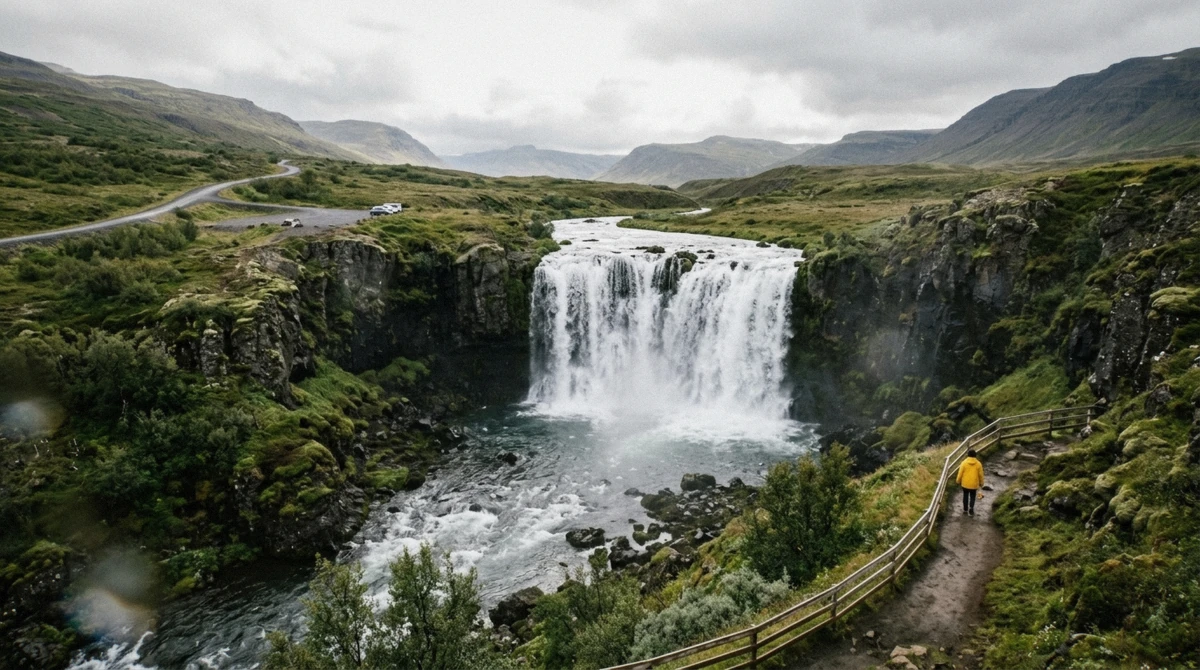
June or July. From late August the reservoir spills and Stuðlagil runs grey, which is a different photograph.
If you want both, plus the driest weather
the second half of June. It is the one window where nothing on this page is closed or empty.
If you want quiet more than wildlife
September. Autumn colour, empty car parks, and a town without ships in it.
If you are arriving by cruise ship
your month is chosen for you, so choose the trip instead. Everything running is compared in the Seydisfjordur tours lineup.
If you are coming in winter
drive yourself, watch the pass forecast daily, and treat every plan as provisional. No guided trips run from the pier between October and April.
What the Shoulder Months Give You Instead
May and September are the two months people ask about most, usually because flights are cheaper or the school calendar decides for them. Both are worth taking, for different reasons.
May is the better of the two. The puffins are ashore, the river is turquoise, the rainfall is nearly as low as June's at 67 mm, and the coaches are running with space on them. What you lose is warmth, at 8.4°C, and the certainty that everything in the town has opened for the season.
September is the trade in reverse. The wildlife has gone, the river is grey, and the rain nearly triples from June. What you get is a landscape turning colour, car parks with room in them, and a town that is no longer performing for two thousand visitors a day. If you have been to Iceland before and are coming for the place rather than the checklist, September is the underrated month here.
What neither shoulder month gives you is the safety margin of high summer. In May a late snowfall on the pass is possible; in September the first storms arrive. Both are reasons to book trips that cancel free rather than to stay away.
Timing Questions
What is the best month to visit Seyðisfjörður?
June. It is the driest month of the year at 56 mm of rain, the puffins are ashore, the river at the canyon is still turquoise, and the light barely goes out. July is a close second and warmer at 13°C, with more visitors.
When is the cruise season in Seyðisfjörður?
May to September, peaking between June and August. Outside that window there are no calls and no guided trips leave the pier. The cruise port guide covers berths, tendering and how long a typical call lasts.
Is September a good time to visit?
For landscape, yes. For wildlife, no. Rainfall almost doubles to 173 mm, the puffins have gone, and the canyon river has turned grey. What you get instead is autumn colour and very few people, which suits some trips and ruins others.
Can you visit in winter?
You can, by car, with the road forecast open. There are no cruise calls, no guided trips from the pier, about four usable hours of light in midwinter, and a pass that closes in storms. It is also the only season with northern lights over the fjord.
When is the weather driest?
June and July, at 56 and 57 mm. The wettest is October at 214 mm, with January close behind at 211 mm. The annual total is over 1,650 mm, which is roughly twice Reykjavík, and the reason a waterproof matters more than a warm coat here.
Does the road out of town close often?
In winter, yes. Route 93 crosses the Fjarðarheiði pass at 600 m and shuts in storms, sometimes for days. In the summer season it is a scenic half hour. What happens to a booked trip when it closes is covered on the weather and cancellations page.
Is there a midnight sun in Seyðisfjörður?
Not the true midnight sun of the Arctic Circle, but close enough that it changes the day. At 65 degrees north the weeks either side of the solstice never get properly dark, and a long dusk runs from about eleven until two. The practical effect is that the evening becomes the best part of the day for the colony and the canyon, which is only useful if you are not sailing at seven.