Puffin Season in Iceland, Month by Month
The puffin season in Iceland runs about four months, because the birds spend the rest of the year on the open Atlantic and come ashore only to breed. It does not open and close on the same date everywhere. This page sets out when they arrive, when they leave, why the Westman Islands run later than the east, and which weeks are worth planning a trip around rather than hoping for.
Quick answer
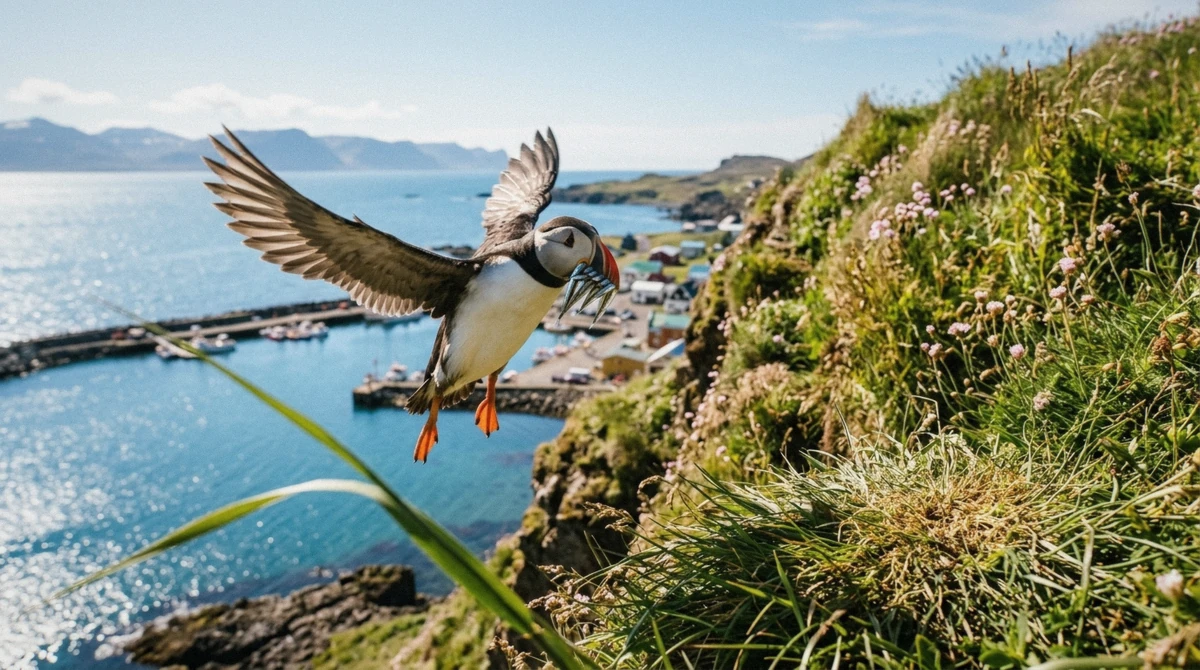
Puffins are ashore in Iceland from about mid-April to mid-August, with the strongest numbers between May and the end of July. The east coast colony at Hafnarhólmi empties by mid-August; the Westman Islands run into early September because the pufflings leave later there. Birds are most active at the colony between 7am and 10am and again from 6pm to 10pm, when adults come and go from the fishing grounds.
Key takeaways
- Arrival: mid-April at most colonies, with numbers building through May
- Peak: May, June and July, when both parents are feeding a chick and traffic at the colony is constant
- Departure: mid-August in the east, into early September in the Westman Islands
- Best hours: 7am to 10am and 6pm to 10pm, which is not when tour coaches arrive
- Nothing to see from October to March. The birds are hundreds of kilometres out at sea
- A poor sand eel year means fewer birds and later feeding, which no forecast will tell you in advance
The Season in One Paragraph
Puffins arrive from the middle of April, pair up, clean out the burrow they used last year, and lay a single egg. Both parents take turns sitting on it for around six weeks, then spend another six weeks flying out to sea and back with sand eels for the chick. Around the middle of August the young leave, at night, alone, and the adults follow within days.
Everything about visiting is downstream of that. In April you get birds on the water and few in the air. In June and July you get constant traffic because two parents are feeding one chick. By the third week of August the hillside is grass again.
What the four months actually look like
A pair returns to the same burrow year after year and often to the same partner, which is why the colony fills so fast once the first birds are back. The burrow runs a metre or so into the turf, sometimes further, with a chamber at the end and a second side chamber the chick uses as a toilet.
One egg, no second attempt if it fails. Both adults incubate in shifts of a few hours to a day, and the change-over is one of the things worth watching for on a boardwalk: a bird lands, walks in, and another walks out and takes off downhill.
Once the chick hatches, both parents fish. A puffin can hold a dozen or more sand eels crosswise in its beak, held against a rough tongue and a hinged upper jaw, and a good July afternoon at a colony means a bird landing with a beakful every few minutes. That is the sight the season is really about, and it is only available for about six weeks.
Month by Month
Dates shift by a week or two with the weather and the fish. This is the pattern most years follow.
| Month | What the birds are doing | Worth a trip? |
|---|---|---|
| April | First arrivals from mid-month, mostly rafting on the water, burrow cleaning begins | Only if you are there anyway |
| May | Numbers build fast, pairs settle, eggs laid towards the end of the month | Yes, and the colonies are quiet |
| June | Incubation, both adults present, long daylight | Yes, the reliable month |
| July | Chicks hatched, constant fish runs, the busiest air traffic of the season | Yes, the best month for behaviour |
| Early August | Feeding continues, first pufflings preparing to leave | Yes, but book the first half |
| Late August | East and north colonies empty; Westman Islands pufflings start leaving at night | Only the Westman Islands |
| September | Stragglers in the south, nothing in the east | No, other than Vestmannaeyjar in the first week |
| October to March | At sea, hundreds of kilometres offshore | No colony in Iceland holds birds |
Why the east ends first
The colony at Hafnarhólmi in Borgarfjörður Eystri is generally quoted as mid-April to mid-August, and the village is straightforward about it. Once the chicks fledge there is nothing to keep the adults on land, and the rock goes quiet within days rather than weeks.
The Westman Islands run later. Pufflings there leave the burrows through late August and into September, which is why the islands have a tradition nowhere else does: young birds confused by the town lights land in the streets at night, and children collect them in boxes and release them at the sea the next morning.
If your trip falls in the last two weeks of August, that difference decides where you go.
Time of day matters more than most people expect
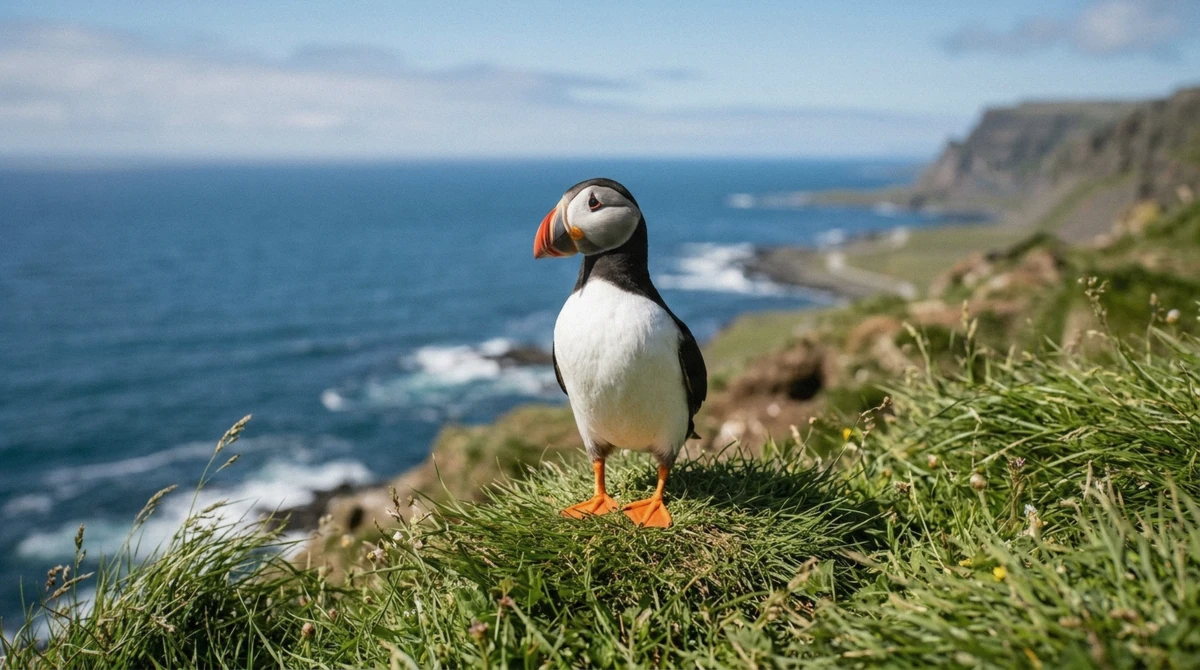
Adults spend the middle of the day at sea. The colony fills between 7am and 10am and again from 6pm to 10pm, when birds are arriving with fish or leaving to fetch more.
Cruise coaches and day tours land between eleven and two, which is the quiet stretch. You will still see hundreds of puffins sitting on the turf, and you will see far fewer in the air. Anyone with a car and an evening should go at seven, when the light is also better and the boardwalks are empty.
Planning Around the Season
The season is fixed and your dates usually are not, so the planning is about matching one to the other.
- Check your travel dates against mid-April and mid-August before booking anything with the word puffin in it
- If you are sailing or driving in the last fortnight of August, aim for the Westman Islands rather than the east or north
- Build in an evening rather than a midday visit if you have a car, for the air traffic and the light
- Look at the village webcam at Hafnarhólmi before you commit to the drive late in the season
- Bring binoculars whatever the month. Half the colony sits further out than a phone camera can reach
- Book a tour with free cancellation, since a wet clifftop day is worth rescheduling and a fixed booking is not
The thing nobody can plan for
Breeding success varies year to year and it is driven by fish. Sand eels are the main food, and when the shoals fail, adults spend longer at sea, feed less often, and in bad years abandon the attempt. Iceland has had several poor seasons of exactly that kind, and the Atlantic puffin is now listed as vulnerable by the IUCN.
What that means in practice is modest: a colony that had constant traffic one July can be noticeably quieter the next. Nobody publishes a forecast, and any operator who promises you numbers is guessing.
Season by Colony
The seven places worth travelling for, and the window each one actually holds birds. The full colony comparison covers how to reach each.
| Colony | Region | Window | Peak weeks |
|---|---|---|---|
| Hafnarhólmi, Borgarfjörður Eystri | East | Mid-April to mid-August | Late May to late July |
| Vestmannaeyjar | South | May to early September | June to late August |
| Látrabjarg | Westfjords | Late April to early August | June and July |
| Dyrhólaey | South | May to mid-August | June and July |
| Grímsey | North | May to early August | June and July |
| Akurey and Lundey | Reykjavík | May to mid-August | June and July |
| Ingólfshöfði | Southeast | May to early August | June and July |
Two patterns come out of that table. June and July are peak everywhere, so if your dates are flexible at all, that is the answer. And the south runs later than the rest of the country by two to four weeks, which is worth knowing if your trip is at either edge of the season.
Seeing Them From East Iceland
Off a ship at Seyðisfjörður the season question is the whole booking decision, because the colony is 92.9 km away and there is no bus and no rental desk in the town. Two coaches run there, at $225 and $227, taking five and six hours door to door, and both are compared on the puffin tour page.
Booked inside the window, that is the easiest puffin watching in the country. Booked in September, it is three hours of driving to an empty rock, and the honest thing for anyone selling it to say is exactly that. If your call falls late in the season, Stuðlagil Canyon does not migrate, and the rest of the options are on the homepage.
Which Weeks Suit Which Traveller
If your dates are fixed in June or July
book anything you like. Every colony in the country is at peak and the only decision left is which one, which the colony comparison settles.
If you are travelling in the second half of August
go south. The Westman Islands still hold pufflings; the east coast colony is grass by then.
If you are photographing rather than sightseeing
aim for early July and go at seven in the evening, when adults are flying in with fish and the light is low.
If you are in Iceland in May
go anyway. Fewer birds in the air, far fewer people on the boardwalk, and the pairs are settled enough to watch properly.
If your trip falls outside mid-April to mid-August
drop the idea rather than buy a ticket for it. There is no colony in the country with birds on it, and no operator can change that.
Season Questions
When do puffins arrive in Iceland?
From about the middle of April, first as birds rafting on the water offshore, then coming onto the slopes to clean out last year's burrows. Numbers build through May, and by the end of that month most pairs have laid their single egg.
When do puffins leave Iceland?
Around the middle of August at most colonies, including Hafnarhólmi in the east. The chick leaves the burrow at night on its own and the adults follow within days. The Westman Islands run later, with pufflings departing through late August and into early September.
What is the best month to see puffins in Iceland?
July, for behaviour. Both parents are flying fish to a chick underground, so the traffic at the colony is constant. June is a close second with longer daylight and slightly fewer visitors. May is quieter on the boardwalks and the birds are settled but not yet feeding chicks.
What time of day are puffins most active?
Between 7am and 10am and again from 6pm to 10pm, when adults come in from the fishing grounds or head back out. Tour coaches arrive between eleven and two, which is the quietest window of the day at any colony.
Can you see puffins in Iceland in September?
Only in the far south, and only in the first week or so. The Westman Islands hold pufflings into early September. Everywhere else, including the whole of East Iceland, the colonies are empty by the third week of August.
Why are there fewer puffins some years?
Sand eels. Puffins feed their chicks on them, and when the shoals fail the adults spend longer at sea and raise fewer young. Iceland has had a run of poor breeding seasons for that reason, and the species is now listed as vulnerable. It is not something a forecast can tell you before you book.
Is there a puffin webcam?
The village at Borgarfjörður Eystri runs a camera on the colony, which is the fastest way to check whether the birds are still ashore before you commit to a drive or a tour late in the season.